
SpaceX IPO: Beyond the Headlines — 5 Hidden Messages Investors Should Pay Attention To

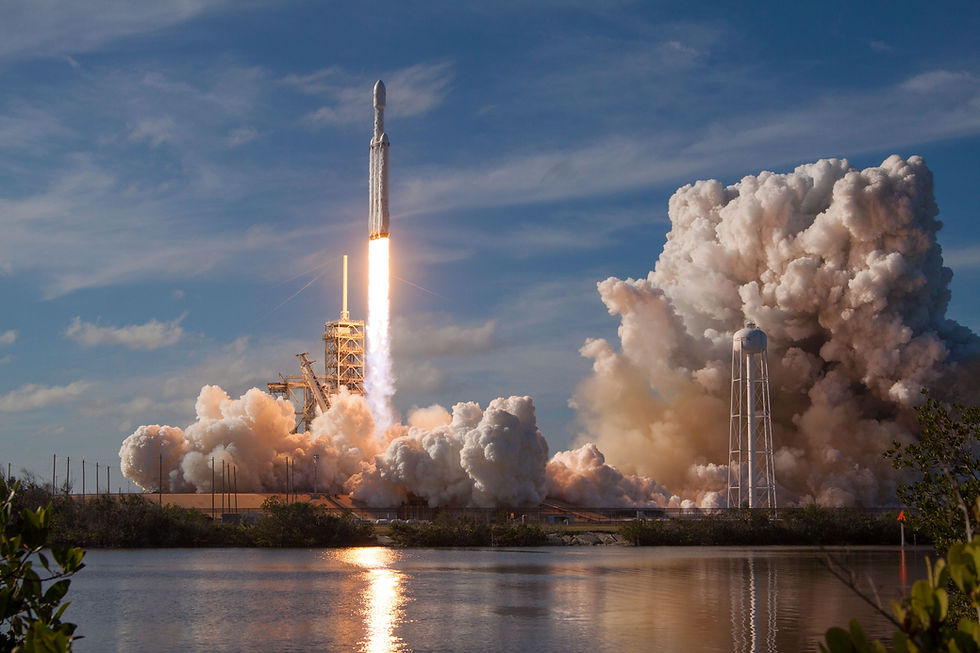
The long-awaited SpaceX IPO has finally arrived, and as expected, it has captured the attention of investors worldwide. For years, SpaceX remained one of the most valuable private companies in history, attracting institutional investors eager to gain exposure to Elon Musk's vision of space exploration, satellite communications, artificial intelligence, and future interplanetary infrastructure.
Most headlines have focused on the company's eye-catching valuation, the size of the offering, and Elon Musk's reputation. However, experienced investors understand that the most important information is often not found in the marketing narrative, but rather hidden within the details of the prospectus itself.
When reviewing a major IPO, investors should always ask a simple question:
What is management really telling us without saying it directly?
Here are five important signals that investors should carefully evaluate before making any investment decision.
1. SpaceX Is No Longer Just a Space Company
The first hidden message from the prospectus is that SpaceX no longer wants investors to value it as a rocket-launch company.
Historically, investors viewed SpaceX as a business focused on reusable rockets and satellite launches. However, the IPO filing reveals a much broader vision. The company is increasingly positioning itself as a technology platform encompassing:
• Starlink satellite communications
• Artificial intelligence infrastructure
• Data centre operations
• Orbital computing networks
• Future space-based industrial ecosystems
This shift is significant because launch services alone would likely not justify a multi-trillion-dollar valuation. By expanding its narrative into AI, data infrastructure, and global communications, SpaceX is effectively asking investors to value the company more like a technology conglomerate rather than an aerospace contractor.
The opportunity is enormous, but so is the execution risk.
2. Starlink Is Carrying More Weight Than Most Investors Realize
While rockets dominate media coverage, the prospectus suggests that Starlink has become the company's primary economic engine.
Revenue growth continues to be driven heavily by recurring subscription income generated through satellite internet services. Reports indicate that Starlink contributes the majority of SpaceX's commercial cash flow and profitability.
For investors, this creates an important consideration.
When purchasing SpaceX shares, investors may believe they are buying a space exploration company. In reality, they may be buying a global telecommunications and connectivity business whose future valuation depends largely on subscriber growth, pricing power, and competitive positioning.
Understanding what truly drives cash flow is often more important than understanding what generates headlines.
3. Revenue Is Growing — But Losses Are Growing Too
One of the most overlooked details in the IPO filing is the relationship between revenue growth and profitability.
SpaceX disclosed strong revenue expansion, but it also reported substantial losses as it continues investing heavily in Starship development, AI initiatives, satellite infrastructure, and future growth projects. Reports indicate approximately US$18.7 billion in revenue alongside multi-billion-dollar losses.
This is not necessarily a negative sign.
Amazon, Tesla, and many transformational companies spent years prioritising growth over profitability.
However, investors should understand that they are not buying a mature cash-generating utility. They are investing in a company that remains in aggressive expansion mode and will likely require significant ongoing capital expenditure.
The key question becomes:
Can future earnings eventually justify today's valuation?
4. Elon Musk Still Controls Everything
Perhaps the most important governance disclosure is that Elon Musk will retain overwhelming voting control after the IPO through a dual-class share structure. Reports indicate Musk will continue to hold approximately 85% voting power.
This creates both advantages and risks.
Advantages include:
• Long-term decision making
• Reduced short-term market pressure
• Strong founder leadership
Risks include:
• Limited shareholder influence
• Reduced accountability
• Key-man dependency
Investors are effectively making a decision not only on SpaceX's business model but also on their confidence in Elon Musk's leadership over the next decade.
The prospectus makes it clear that Musk remains the central decision-maker.
5. The Valuation Assumes Success Across Multiple Future Industries
Perhaps the biggest hidden message is embedded in the valuation itself.
The prospectus suggests investors are not being asked to value today's business alone.
Instead, investors are being asked to place value on:
• Future Starlink dominance
• AI infrastructure expansion
• Orbital data centres
• Space-based computing networks
• Lunar and Mars-related opportunities
• Long-term space industrialisation
These initiatives could eventually create extraordinary value.
However, many remain largely unproven commercial markets today. As a result, a significant portion of SpaceX's valuation reflects expectations about future possibilities rather than current earnings power.
This means the stock may behave more like a venture capital investment than a traditional public equity investment.
What Should Investors Do?
The SpaceX IPO represents one of the most anticipated public offerings in modern financial history. The company has fundamentally transformed space launch economics, built one of the world's largest satellite networks, and continues to push the boundaries of technological innovation.
However, successful investing requires separating excitement from analysis.
Before investing, ask yourself:
• Am I investing in today's business or tomorrow's vision?
• How much of the valuation is supported by current cash flow?
• How much depends on future execution?
• Am I comfortable with founder-controlled governance?
• Can I tolerate potentially significant volatility?
The answers to these questions will determine whether SpaceX fits within your investment strategy.
Final Thoughts
SpaceX may ultimately become one of the defining companies of the 21st century. Yet the most successful investors understand that even exceptional companies can become poor investments if purchased at unrealistic expectations.
The hidden message inside the SpaceX prospectus is simple:
Investors are not merely buying rockets. They are buying Elon Musk's vision of the future.
Whether that vision ultimately justifies the valuation will be one of the most closely watched investment stories of the coming decade.
---
Copyright 2026 Firefly International Group Ltd. All rights reserved.
This material may not be published, broadcast, rewritten or redistributed.


Comments